ServicesPatio Doors
Patio Door Replacement in Sammamish
When a sliding or hinged patio door drags, drafts or leaks, we take it out and fit a new one that rolls smoothly, closes snug and rests on a flashed, sloped sill. Expect a written quote, covered floors and, if a claim may be involved, careful photos and notes.
A patio door should open easily and keep the weather out
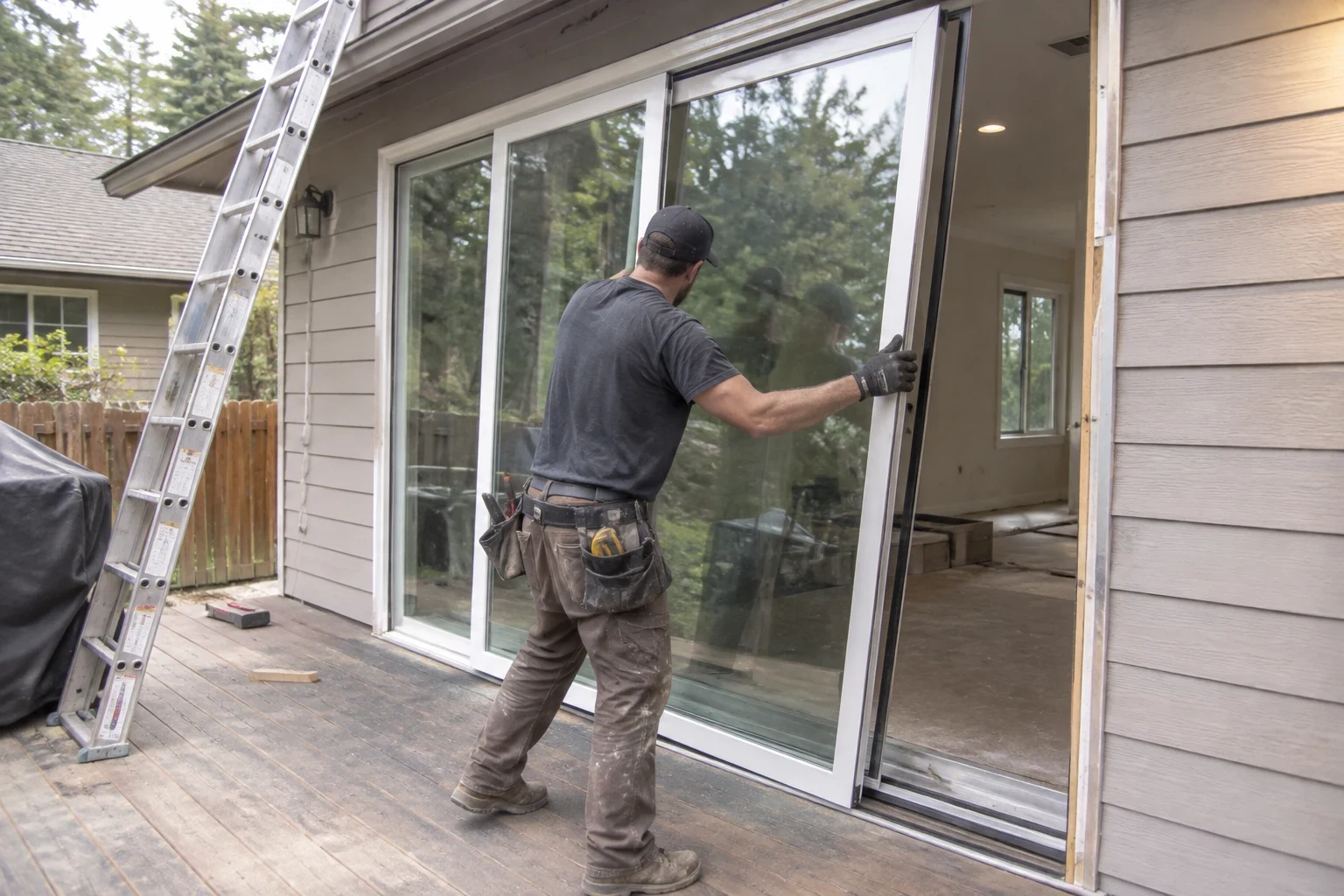
A patio door is the largest moving opening in most homes. When it drags, leaks or fogs, you feel it every day. We remove the old unit down to the rough opening, check the framing and subfloor, and set a new door on a sloped sill pan so water drains out instead of wicking into the floor.
Not every tired door needs replacing. Sometimes new rollers or an adjusted track solve the problem, and we will tell you so. When the frame is warped, the seals have failed or the glass is damaged, a new door is the better long-term answer.
If a windstorm, a fallen limb or a break-in damaged the door, we photograph what we find, measure carefully and write a line-item estimate your adjuster can read. We explain how the claim process usually works. We don't act as the adjuster, and we never promise what a policy will cover.
What the work includes
Opening check before anything is ordered
Before we order, we measure the rough opening, check it for level and plumb, and probe the sill and subfloor for soft wood. The new door is sized to the real opening, not to a guess from the old frame.
Door styles and materials
Choose between sliding doors and hinged French-style doors in vinyl, fiberglass or aluminum-clad wood. Every option uses tempered safety glass, and low-E coatings help hold heat through long, gray winters.
Sill pan and flashing
Most patio door leaks start at the sill. We install a sloped pan and lap the flashing so water is directed outward, then seal the exterior perimeter.
Interior trim and finish
We insulate the gap around the frame with low-expansion foam and fit new casing where needed. The joints are filled and the trim is left clean, ready for paint or already finished.
Hardware set up properly
Rollers, hinges, locks and strike plates are adjusted until the door closes smoothly and latches without a shove.
Protection and cleanup
Floors are covered from the door to the work area, the old unit is hauled away, and we vacuum before we leave.
Signs your patio door is due for replacement
It fights you to open
A sliding door that grinds or jumps the track usually has worn rollers or a bent track. If adjustment no longer helps, the frame itself may have shifted.
Fog between the panes
Moisture trapped inside the glass means the insulating seal has failed. The door is losing heat, and the haze won't wipe away.
Water at the threshold
Damp carpet, swollen laminate or dark stains near the sill point to a leak. Catching it early keeps the subfloor from rotting.
Cold drafts along the edges
Flattened weatherstripping or a gap you can see daylight through means air is moving freely, especially when wind drives rain against the house.
Storm or break-in damage
Cracked glass, a bent frame or a forced lock should be photographed before anything is moved. We can help you record it for your insurer.
How a patio door project runs
- 1
A call and a visit
Tell us what is going on with the door. We schedule a time to measure, look at the opening and walk you through the options.
- 2
A written quote
You get a line-item quote that lists the door, materials, trim and any repair to the sill or subfloor. Once you approve it, we order the door.
- 3
Install day
We cover your floors, remove the old door, repair the opening if needed and set the new unit on its sill pan. Most installs are finished in a single day.
- 4
Seal, trim and adjust
The frame is insulated and flashed, the trim is fitted, and the hardware is tuned until the door glides and locks cleanly.
- 5
Walkthrough
We show you how the lock and screen work, how to keep the track clean, and leave the area as tidy as we found it.
What affects the price of a patio door
Patio door pricing depends mostly on the door you choose and what we find once the old one comes out. We quote each job in writing after seeing the opening, so the numbers reflect your home. Flexible payment options are available.
- Width and panel count
- Two sliding panels in a common width sit at the lower end. Three- and four-panel sliders, or hinged pairs flanked by sidelites, take more material and more hours to set.
- Frame material and glass
- Vinyl is the most economical choice. Fiberglass and aluminum-clad wood cost more, and so do upgraded glass packages and built-in blinds.
- Condition under the sill
- If a long-term leak has softened the subfloor or framing, that wood has to be replaced before the new door goes in. We show you photos before doing any added work.
- Standard or custom size
- Doors that match common sizes arrive faster and cost less. Unusual openings may need a custom unit or framing changes.
- Trim and finish
- Reusing existing casing keeps costs down. New interior trim, exterior trim or a factory-finished stain adds to the total.
Patio door questions
Something not covered here? (425) 675-7045
How long will my home be open to the weather?
Only for a few hours. The old door stays put until the new one has arrived and we have checked it over. Most installs are finished in a single day, and we don't pack up until the new door is set, sealed and locking.
Can you help with an insurance claim for a damaged door?
Yes, within limits. We photograph the damage, note what failed and why, and write an itemized estimate you can share with your adjuster. The insurer decides what is covered, and we will be honest about what we can and can't speak to.
Should I choose a sliding or a hinged door?
Sliders save floor space and suit tight rooms or decks with furniture close by. Hinged French-style doors open wider and have a more traditional look, but they need clear room to swing. We can show you both during the visit.
Do I need a permit?
A same-size replacement often doesn't require one, but widening an opening or changing a header usually does. We tell you which applies after seeing the job and handle the permit when one is needed.
What happens to my floors and furniture during the work?
We ask you to clear a few feet around the door, then lay down protection from the entry to the work area. Dust is kept to the opening itself, and we vacuum before we leave.
Let's take a look at your patio door
Tell us how the door is behaving and we will set up a time to measure and talk through the options. There is no pressure to decide on the spot.